
Where Anxious Attachment Comes From
Anxious Attachment: Why It Feels So Intense—and How Healing Happens
If you’ve ever found yourself constantly worrying about whether someone still cares about you, replaying conversations in your head, or feeling panicked when someone pulls away emotionally, you may be experiencing patterns associated with anxious attachment.
Anxious attachment isn’t a character flaw or a sign that you’re “too much.” It’s a relationship pattern rooted in early emotional experiences and nervous system conditioning. Understanding it can be the first step toward building healthier, more secure relationships—with others and with yourself.
What Is Anxious Attachment?
Anxious attachment is one of the four primary attachment styles identified in attachment theory. People with this attachment style tend to crave closeness and reassurance but often feel uncertain about whether their needs will be met.
Common experiences include:
Fear of abandonment
Constantly seeking reassurance from a partner
Overanalyzing texts or conversations
Feeling emotionally dysregulated when someone becomes distant
Difficulty trusting that relationships are stable
At its core, anxious attachment is driven by a deep need for emotional safety and connection.
Where Anxious Attachment Comes From
Attachment patterns often develop in early childhood relationships with caregivers.
When caregivers were inconsistent—sometimes nurturing and sometimes unavailable—a child may have learned that love and connection feel unpredictable. As adults, this can translate into heightened sensitivity to changes in closeness or attention.
Your brain and nervous system learned something important:
Connection feels uncertain, so I need to stay alert to protect the relationship.
This heightened awareness can become a form of relationship hypervigilance.
What It Feels Like Internally
People with anxious attachment often experience strong emotional responses in relationships.
You might notice:
A racing mind when communication slows down
Physical anxiety when someone seems distant
A strong urge to “fix” the relationship quickly
Feeling responsible for maintaining the connection
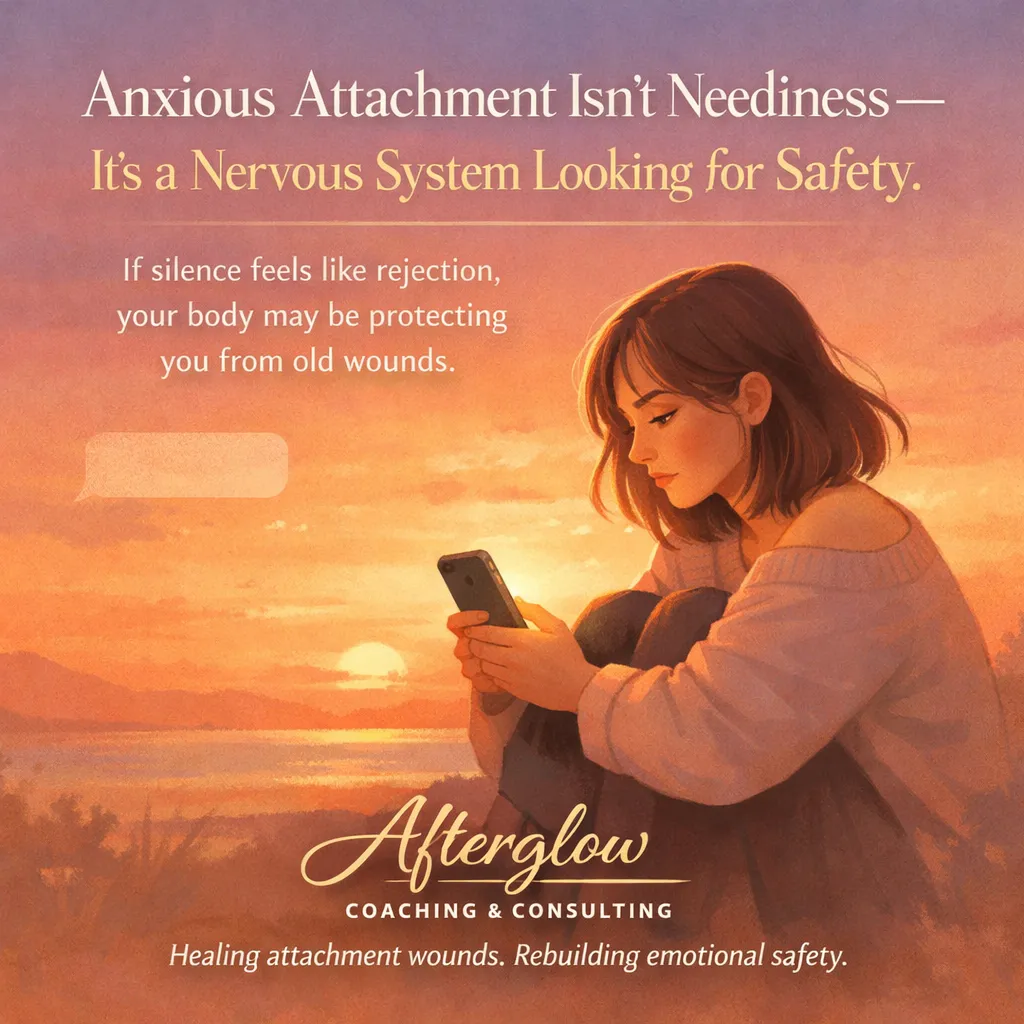
These responses are not irrational—they are your nervous system trying to maintain emotional safety.
The Pursue–Withdraw Cycle
Anxious attachment often becomes part of a relationship pattern known as the pursue–withdraw cycle.
In this pattern:
One partner (often anxiously attached) seeks reassurance and closeness.
The other partner may feel overwhelmed and pull away.
The distance increases anxiety, leading to more pursuit.
Both partners end up feeling misunderstood, even though neither person is trying to cause harm.
Healing Anxious Attachment
The encouraging news is that attachment styles are not permanent. With awareness and supportive experiences, people can move toward secure attachment.
Some helpful steps include:
1. Developing nervous system awareness
Learning to recognize when your body moves into anxiety or hypervigilance allows you to pause before reacting.
2. Building internal reassurance
Practicing self-validation and emotional regulation reduces the need for constant external reassurance.
3. Communicating needs clearly
Instead of seeking reassurance indirectly, expressing needs calmly and directly can strengthen connection.
4. Choosing emotionally safe relationships
Healing often happens through relationships where consistency, empathy, and reliability are present.
A Compassionate Perspective
Many people with anxious attachment are deeply caring, emotionally aware, and committed to connection. The same sensitivity that creates relationship anxiety can also become a strength in empathy and emotional depth when it’s supported by secure patterns.
Healing doesn’t mean becoming independent to the point of disconnection. It means learning that connection can be safe, steady, and mutual.
Final Thoughts
If you recognize anxious attachment patterns in yourself, know that you are not alone. These patterns developed for a reason, and with awareness and support, they can evolve.
Your nervous system learned to seek safety in connection. With time, practice, and supportive relationships, it can also learn that love doesn’t have to feel uncertain to be real.